
Interview: Brett Austin talks about Flood Zone
- NZ Booklovers

- 1 day ago
- 4 min read
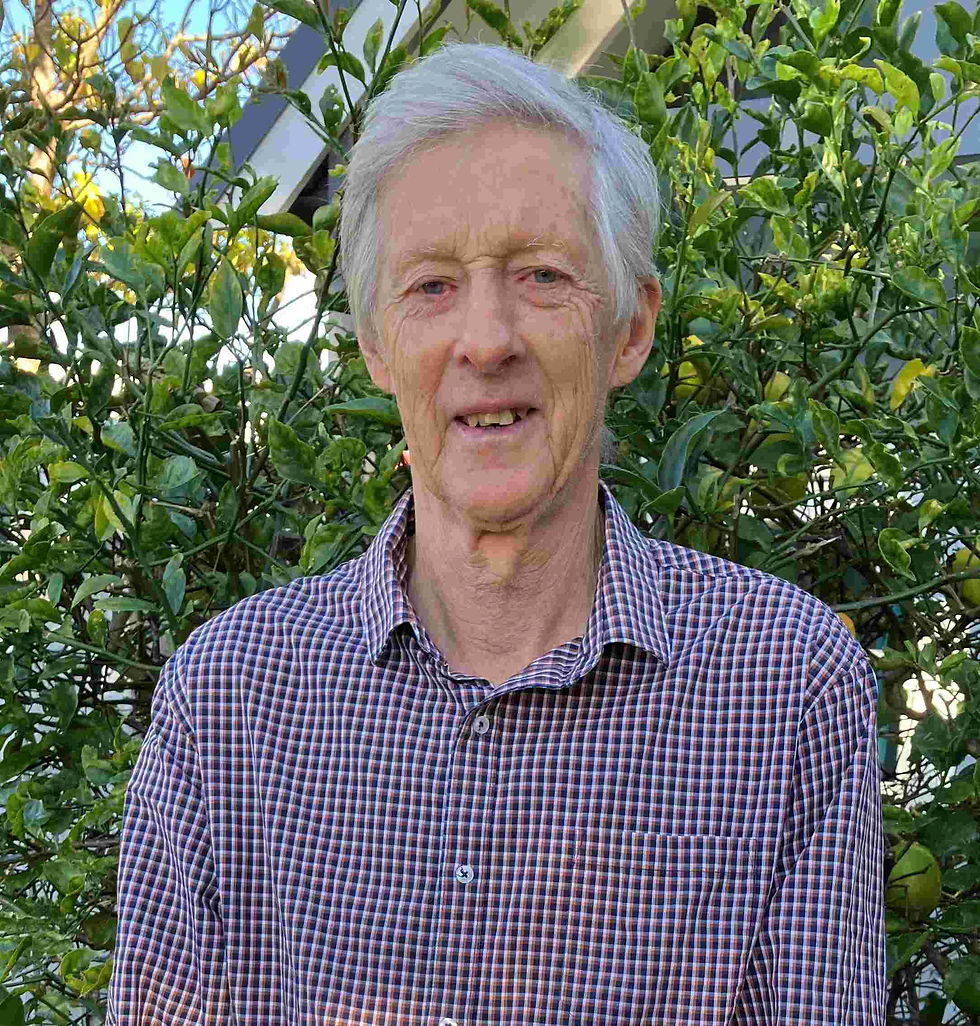
Brett Austin grew up in Rotorua and has spent most of his life in the North. Before turning to writing, he worked as a social worker and builder, and held roles in community nursing management for NGOs and in child welfare for the government. He has cycled across Canada and the United States and completed the ‘Big Lap’ around Australia, developing his writing along the way.
Brett talks to NZ Booklovers about Flood Zone.
Tell us a little about your novel.
Flood Zone follows Sam Cole, an older man down on his luck, as he stumbles into a web of murder, council corruption and climate-change decisions. Set against the very real pressures of rising flood risk and local politics, the book examines how communities split when short-term profit collides with long-term survival.
What inspired you to write this book?
First, simply to see if I could tell a good yarn and then, because I had something to say. A few years earlier I entered ‘How do you write a novel?’ into Google. Suddenly, there before me, a whole new world opened up. Writing and publishing and promoting. Early on in my search, an online advisor said ‘Write what you know’. Well, I don’t have a medical background so a medical drama won’t appear under my name. Similarly, a police procedural is not for me. But, I do follow current affairs closely, and the machinations of politicians bother me. That perspective informs Flood Zone’s themes: the growing gap between the haves and have-nots, and the societal cost of unchecked greed and self-interest.

What research was involved?
My earlier novel The Danger Within required hours of effort around how vaccines work so that I could credibly create a fiction. The trigger for Flood Zone came from my reading of several articles on the Newsroom website. These articles detailed the approach of the Thames-Coromandel Council in regard property development low-lying land. The challenge for me was how to blend sometimes-complicated events into a work of fiction where I wanted readers to keep turning the pages. The answer to that lies, I guess, with the readers. What I really hope is that people will remember the story as simply a good yarn.
What was your routine or process when writing this book?
Once again, an internet expert told me about the three-act structure. As a reader, I’d not really know about that. Sounded simple enough. You Tube had many a bright-young-thing in front of a wall of coloured Post-it Notes, one for each chapter, all mapped out. I still don’t know how they do it. Stephen King (On Writing) said something about letting the characters drive the story. This is more my style I’ve discovered. While the big picture is there, I can only get a few chapters ahead in my planning at any one time. A good routine is essential. I start early in the morning, 6 or 7 am. I’ve found that I have to be a zone, a head space that enables me to start. In the quiet. My workroom looks out over the harbour, but to read the screen I must draw the blinds to keep the light out. I find writing hard. Some days, I say to my wife, ‘I can’t do this’ so we walk instead. A pleasing thing I have learnt is that when I get into a jam with the plot, if I let it be for a while, a solution will come to mind.
If a soundtrack were made to accompany this book, name a song or two you would include.
Trinity Roots would fit the drama. Jazz, soul, calms and storms.
If your book were made into a movie, who would you like to see playing the lead characters?
Neill Rea as Sam, Ingrid Park as Carla, Jarod Rawiri as Shades. All from The Brokenwood Mysteries.
What did you enjoy the most about writing this novel?
I started writing late in life. I remain surprised that, out of nowhere, I could write creatively. Most mornings I look forward to opening the file and taking up the challenge. I don’t have mastery of the language like say an Owen Marshall, but I do get pleasure when I find a set of words that work well for me. Also, the satisfaction when I find a plot twist or turn to help the protagonist progress in their search. That I could keep the story credible and blend it with facts about a critical threat the country faces. The satisfaction in seeing the word count tick over, the manuscript finished and the book in my hand is unbeatable.
What did you do to celebrate finishing this book?
Kissed my wife and went for a long pushbike ride on the dusty backroads of the Hokianga.
What is the favourite book you have read so far this year and why?
Tim Winton’s Juice. An amazing flow of words. A dystopian story with a dash of hope.
What’s next on the agenda for you?
I’m working on a novel whose working title is The Plunderers. The premise: Feisty journalist Ava Grace plans to expose corruption in high places, but she must stay alive to do it. It is requiring a lot of research. A non-fiction book called These are the Plunderers—how Private Equity runs—and wrecks —America has provided both inspiration and background material for the story. Before your eyes roll, this is a hidden, but serious issue. Private Equity is regarded by many as ‘shadow banking’, a bit like hedge funds and venture capital. It is not, like the public share market, subject to much regulatory control. The Biden Administration tried to tame the industry but lobbyists won the day. And it’s happening here. The behaviour of many of these companies provides wonderful fuel for a fictional story.
Harbour Lights


