
Kill Shot by Jo Nesbo

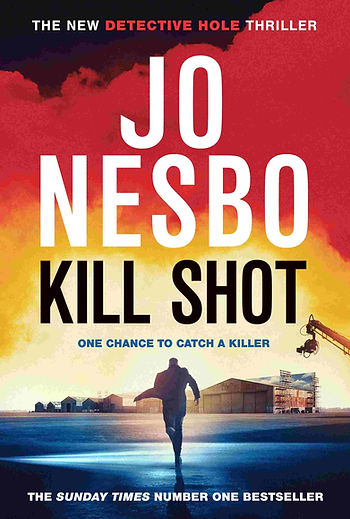
Fourteen novels into the Harry Hole series, Jo Nesbo faces a familiar problem: how much punishment can one detective absorb before repetition begins to blunt the effect? Kill Shot partly answers by moving Harry away from the position he has occupied for decades. He is no longer an Oslo police detective. The badge now belongs to a younger generation, most significantly his stepson Oleg Fauke, while Harry has retreated into the comparatively mundane world of insurance work.
Naturally, retirement from murder proves temporary.
A series of killings begins with the death of a woman whose murder appears to recreate a moment from cinema. More bodies follow, all connected in some way to the film industry, while recordings of the crimes add another layer of performance. Oleg, newly installed in homicide, turns to Harry for help. The reversal is effective: the boy Harry once tried to protect now occupies the institutional role Harry has lost, while the older man becomes adviser, outsider and reluctant specialist.
This relationship gives Kill Shot considerably more emotional interest than the mechanics of its serial-killer plot. Harry has spent much of the series defined by addiction, grief and a destructive attraction to police work. Here, Nesbo allows him to confront a different question: what remains when the identity of detective has been removed? His interactions with Oleg, and the changing shape of his relationships with those closest to him, suggest a character entering a new phase rather than endlessly repeating the same collapse and resurrection.
The murders themselves are designed with Nesbo’s usual appetite for the macabre. The cinematic motif gives him plenty of room for elaborate staging, misdirection and grim invention, and the novel moves quickly once the investigation gathers momentum. Film becomes both setting and method, with performance, editing and manufactured reality echoing the killer’s attempts to control what others see. Nesbo, whose recent career has increasingly included screenwriting and adaptation, seems particularly comfortable playing with the vocabulary and mechanics of cinema.
There is, however, a sense that the case is less substantial than the character work surrounding it. The concentration on the film world narrows the novel’s social range, and parts of the middle section circle suspects and possibilities without the relentless escalation of the strongest Harry Hole books. Experienced Nesbo readers will also recognise several familiar manoeuvres: false leads, withheld information and apparently decisive revelations designed to be overturned later. His skill at manipulating suspicion remains impressive, but the machinery is increasingly visible.
What keeps Kill Shot compelling is Nesbo’s command of pace and his continued investment in Harry as a damaged, evolving figure. The violence is graphic, occasionally excessive, yet the novel’s best moments come from smaller shifts in loyalty and family. Oleg’s increasing independence gives Harry something unfamiliar to negotiate: being needed without being in control.
Kill Shot may not reinvent the series, and its central mystery isn't among Nesbo’s deepest, but it points to a potentially interesting reinvention of its protagonist. Harry Hole is getting older, his world is changing, and the people he once protected are beginning to take his place. After fourteen books, that transfer of responsibility may prove more intriguing than another corpse on an Oslo floor.
Reviewer: Chris Reed
Penguin


