
Interview: Majella Cullinane talks about Islands Ever After
- NZ Booklovers

- May 26
- 3 min read
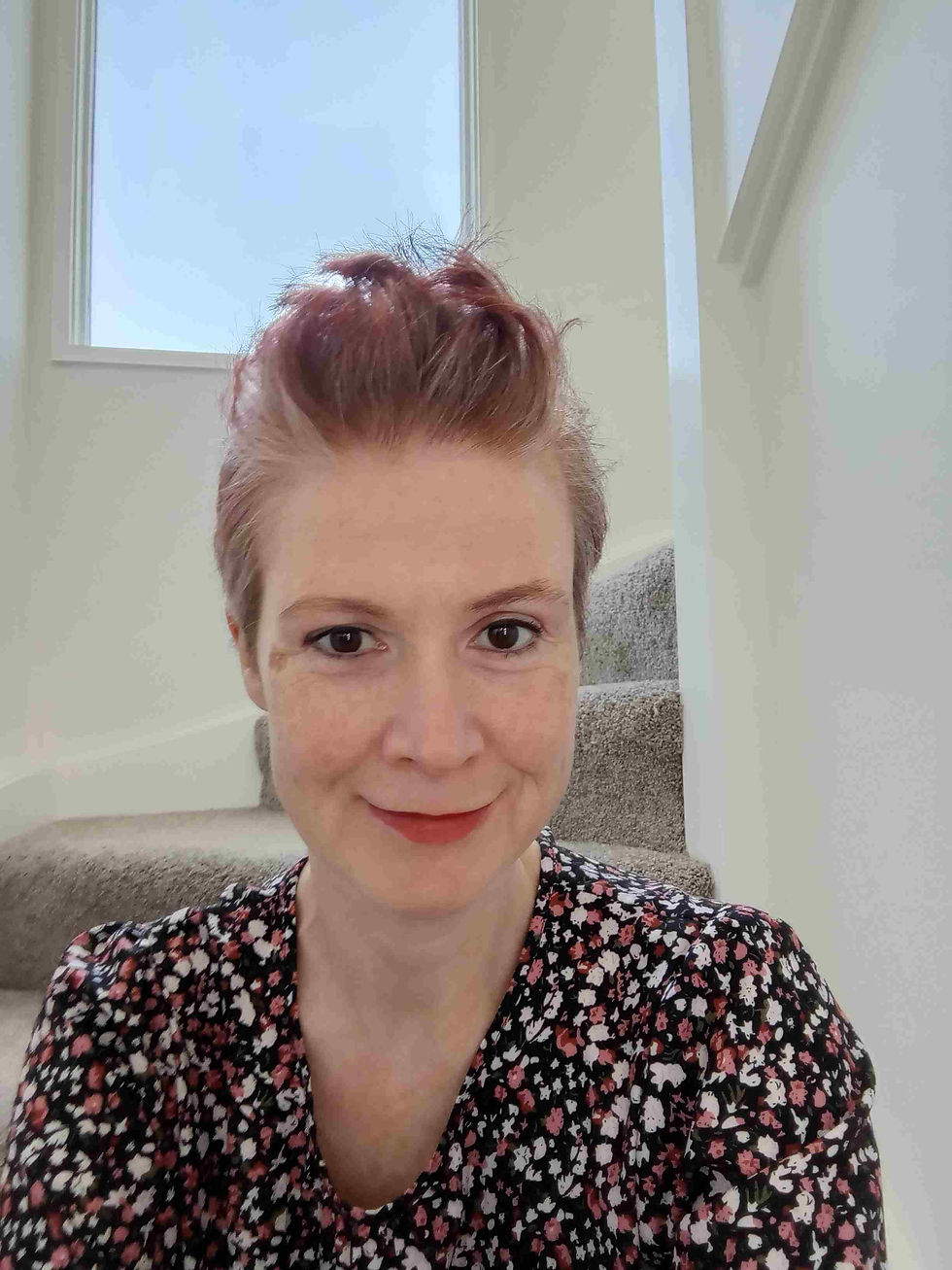
Majella Cullinane writes essays, fiction and poetry. Originally from Ireland, she has lived in Aotearoa New Zealand since 2008 and Ōtepoti Dunedin since 2014. She has published three poetry collections with Salmon Poetry Ireland and Otago University Press. Her debut novel, The Life of De’Ath, Steele Roberts (2018) was shortlisted for the Dundee International Book Prize, a finalist in the 2018 NZ Heritage Book Award, and longlisted for the 2019 Ockham New Zealand Book Awards Fiction Prize. Her short stories have won, been shortlisted or highly commended in national and international competitions, and published in Greece, Ireland, New Zealand, the UK, and the US. She has been awarded residencies and fellowships in Ireland, New Zealand and Scotland. In 2020 she graduated with a PhD in Creative Practice from the University of Otago. Majella talks to NZ Booklovers.
Tell us a little about Islands Ever After.
Islands Ever After is a collection of short stories, spanning the 18th century to the present day. Primarily set on islands across Ireland, Scotland and New Zealand, my stories explore the experiences of outsiders, immigrants, eccentrics and outcasts in search of connection, understanding and belonging.

What inspired you to write this book?
I’ve been writing stories for about twenty years so when I started this collection, I wouldn’t have said it was one thing that inspired me as such, but when the collection started coming together, I realised that many of them are set on islands or feature characters who are metaphorically “islanded” or isolated, and so, I suppose it’s largely inspired by my love of and fascination with islands.
What research was involved?
The historical short stories required a fair bit of research, specifically the story set on Dunedin’s Quarantine Island; Emily and Charlotte Bronte’s stay in Belgium, and the last one, which was inspired by the sinking of The SS Wairarapa on Great Barrier Island in 1894. I really enjoy research so it’s always a delicate balance not to weigh the story down too much with “history” and remember that ultimately, it’s fiction. That of course is not to say the historical part of historical fiction shouldn’t be as accurate as you can make it.
What was your routine or process when writing this book?
I also write poetry, novels and essays, so I’m not sure I have a fixed process or routine so much as when I have an idea for a story, I write a rough draft, and then I write and rewrite until I can see it take shape. I often then leave it “to settle” for a while, and then return to it again. I’m not a particularly fast writer I don’t think. My ideas gestate for quite a while and then I tend to write in intense, dedicated spurts.
If a soundtrack were made to accompany this book, name a song or two you would include. (optional)
Funnily enough I love soundtracks and often listen to them while writing. My favourite contemporary soundtrack composers are Thomas Newman, Max Richter, Philip Glass, Annette Focks and Rachel Portman. I find Annette Fock’s soundtrack for Night Train to Lisbon quite haunting, but if I could choose a composer to compose a soundtrack for an adaptation, it would definitely be Thomas Newman.
If you had to choose your favourite story, what would it be, and why?
Oh, that’s a tricky one. I wrote End of the Rope back in St Andrews Scotland in 2006 and the character’s voice, the real-life public executioner, Betty Sugrue also known as Lady Betty, came to me very clearly. I’m not sure it’s my favourite per se but it’s certainly a haunting tale. I also had fun writing from the perspective of Al Capone on Great Barrier Island.
What did you enjoy the most about writing Islands Ever After?
I think all the stories are quite unique in their own way: told from male and female perspectives, first and second and third points of view, set in New Zealand, Ireland, Scotland and Belgium, so I guess I enjoyed the variety and I also really enjoy doing research.
What did you do to celebrate finishing this book?
A nice bottle of a prosecco with a home-cooked meal.
What is the favourite book you have read so far this year and why?
I loved Carys Davies’ short novel Clear set on a remote island in Scotland in 1843. Crisp lyrical prose and a cracker of a story IMHO.
What’s next on the agenda for you?
I’m currently working on my 4th poetry collection and a memoir/essay collection.
Quentin Wilson Publishing


