Interview Casey Kaa talks about Po Marie, My Moko


Casey Kaa (Ngāpuhi, Tainui) is a television producer, writer and director, whose career in Māori media celebrates language and culture. Raised in a world of magic and play, she has led creative teams to co-produce bilingual and educational programming for tamariki and their whānau. Casey champions projects that nurture Māori voices and aims to inspire the next generation of dreamers and storytellers. Casey talks to NZ Booklovers.
Tell us a little about Po Marie, My Moko.
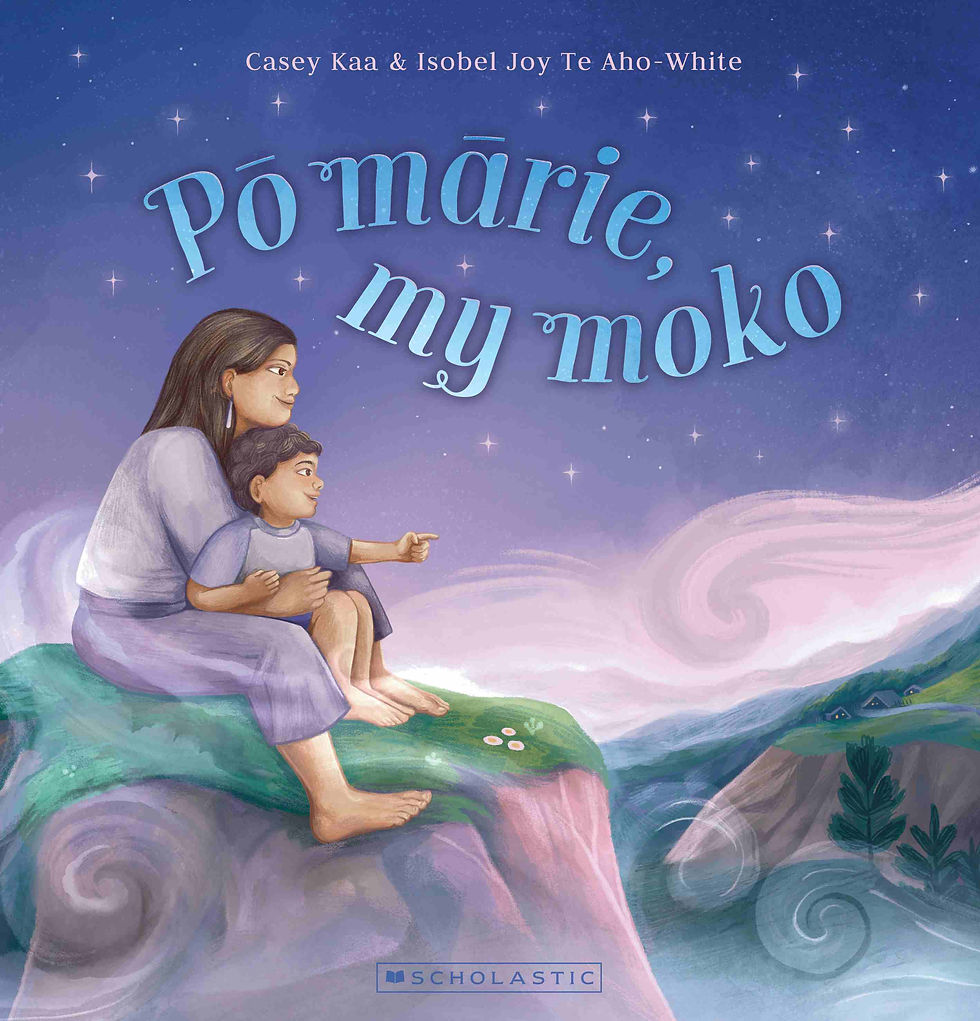
Pō Mārie, My Moko is a gentle bedtime journey that carries a kuia and her mokopuna through the natural world, guided by atua, ancestors and the rhythms of te ao Māori. From the maunga and ngahere to the awa and moana, the story weaves calm breathing and reassurance into a soothing night-time ritual. It closes with a loving reminder that every child is a precious taonga.
What inspired you to write this book?
Actually, it was a homework task set by a friend of mine during a creative development wānanga. I wrote it about my mum and my nephew, and the special connection they shared.
Mum was all about adventure and play and special trips with her moko, so the inspiration was to capture that for him.
Mum was also an ECE teacher and helped to guide and grow many many mokopuna, so it's a tribute to her mahi too.
What research was involved?
I was raised with all four of my grandparents, as well as two great-grandmothers who loved us endlessly; that, combined with the day-to-day experience of the way my mum (and dad) poured their hearts into their 'Nanni moko', meant that I have a lifetime's worth of research stored in abundance.
What was your routine or process when writing this book?
My family are a fabulous resource for this relationship and the language we use with each other everyday so it was fairly straightforward. I'm a children's TV writer/director by day, so I actually wrote this story in one evening.
I waited until Scholastic had an open call for new writers, which happened to be on Valentine's Day, which is also my parents' wedding anniversary (which I took as a fairly positive sign), sent it in, and the rest is history.
How did you work with illustrator Isobel Joy Te Aho-White?
Scholastic was the go-between for this kaupapa, so I've never actually met Joy, nor did we communicate throughout; notes were made in various passes that went via the team, who used their expertise to guide the process.
What do you hope children will take away from reading this picture book?
I hope that they feel the love that is seeded throughout, that they feel the warmth of the connection shared between grandparents and their mokopuna, and that they resonate with the worldview that the taiao and our atua are with us whenever we need them.
I'd love for them to imagine their own bedtime journeys, as they head out to collect mauri moe, energy that settles them for sleep.
What did you enjoy the most about writing this book?
Pouring mum's words onto the page, my mum passed away in 2015 and not only is this book for her and Tiaki, it's for those she wasn't hear to meet. It's written more in her voice than it is mine, so it's a reflection of the way she loved her moko and I enjoyed penning her legacy for print.
How did you celebrate finishing this book?
This pukapuka as well as a te reo Māori album that we made both launched in Sep around Te Wiki o te Reo Māori, and the following week my sister and I reallocated to Niue for a month. So our celebration, was literally a month of swimming with whales in Niue, what a dream!
What is the favourite book you have read so far this year and why?
I love you like yellow.
I love reading that pukapuka with my moko, expressing love as flavours and colours and emotions; it's delicious! And Miss Four can almost read it by herself now too.
What’s next on the agenda for you?
More mokopuna content, we're promoting our album 'Whiti ana, tō ana' building our platform hey_moko_ and launching more children's series that entertain and educate our tamariki.
Mum believed that moko (meaning tattoo, permanent mark) and puna (to well up, flow, a spring) could be interpreted to mean that mokopuna are the marks or ripples on the water of life, that resound across the generations. So everything we do and create is for them.
Scholastic New Zealand