
Drained by Leah Ruppanner, PhD

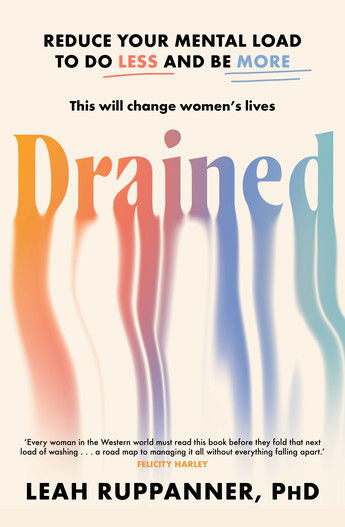
The ‘mental load’ isn’t just appointments, menu planning and birthday presents. It’s the constant, invisible background processing: anticipating, organising, remembering, smoothing and planning that keeps families and workplaces running. Managing the ‘who needs what next’ pipeline, coordinating logistics and keeping a mental map of everything leaves many women running on empty.
In Drained, Professor Leah Ruppanner reveals the real toll of the mental load on women, especially mothers. As a leading sociologist at the University of Melbourne and Vanderbilt University, she doesn’t just name the problem, she makes it impossible to ignore. As a result, Drained is one of those rare books that manages to be both validating and genuinely useful. It doesn’t treat the mental load as a cute label for ‘being busy’ or simply a household to-do list. Instead, Leah expands the definition into what it really is for so many women: the relentless, mostly invisible work of anticipating needs, managing risk, tracking everyone’s wellbeing, and keeping life running smoothly (often alongside paid work).
Grounded in research from the University of Melbourne’s Future of Work Lab, Drained makes a compelling case that the mental load is not a personal failing or a time-management problem. It’s structural, gendered, and cumulative. Leah expands on how motherhood intensifies this load, and how it can leave women feeling constantly ‘on,’ yet never finished. The book gives language to that exhausted, stuck feeling with the sense of working at full speed while your capacity keeps shrinking.
What makes Drained stand out is its practicality. The Mental Load Audit helps you get specific about where your attention and energy are actually going. Rather than offering generic advice to set boundaries or practice self-care, Leah guides you to first map the work you’re carrying, including the cognitive and emotional labour that rarely gets counted. Secondly, she shows you how to make deliberate decisions about what to change. Essentially, Leah presents a clear, research-backed plan and a personal toolkit you can return to, not just a book you nod along with.
Leah’s tone is another strength, she is engaging and compassionate without being vague. She doesn’t minimise how hard this is, but she also doesn’t leave you in despair. The overall effect is empowering in the grounded sense of helping you see the system, name what’s happening, and create a path forward in your own life and relationships.
Drained is especially for women who are tired of carrying the invisible workload, and for partners who genuinely want to understand what ‘helping’ actually requires. It’s also a timely book for anyone interested in gender equity at home and at work, because it shows how the mental load shapes wellbeing, careers and leadership in ways we can’t afford to keep ignoring.
Reviewer: Andrea Molloy
Allen & Unwin


